
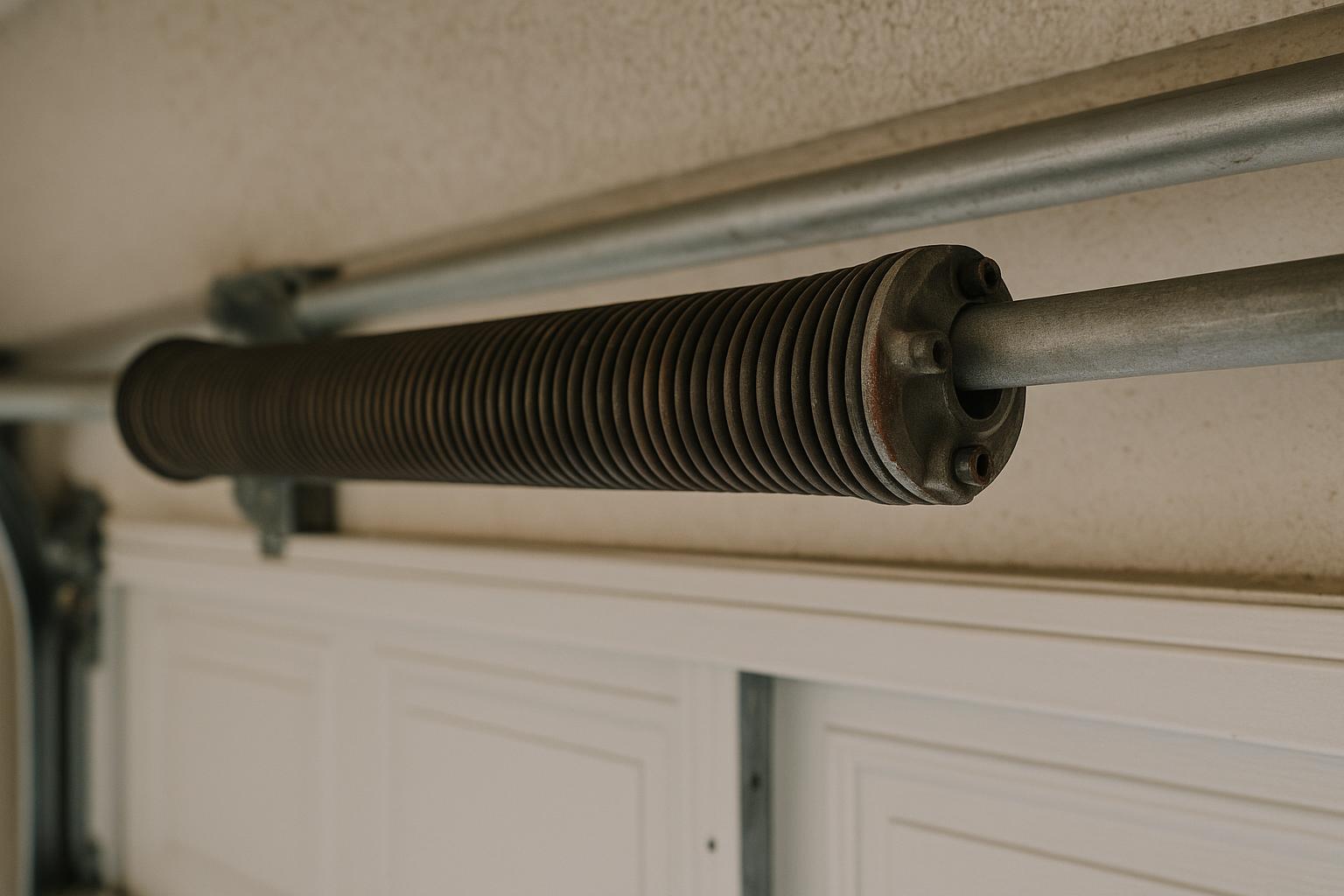
Your Garage Door Springs Are Working Harder Than You Think
Every time you open and close your garage door, the springs do the heavy lifting — literally. A standard residential garage door weighs between 130 and 350 pounds, and the springs are responsible for counterbalancing all of that weight. Your garage door opener doesn't actually lift the door; the springs do. The opener just provides the motorized push to get things moving.
Most homeowners in Sonoma don't think about their garage door springs until something goes wrong. And when a spring breaks, it's usually sudden, loud, and inconvenient. The good news is that springs almost always give warning signs before they fail. If you know what to look for, you can schedule a replacement on your terms instead of dealing with an emergency.
How Long Do Garage Door Springs Last?
The lifespan of a garage door spring is measured in cycles. One cycle equals one full open and one full close. Most standard torsion springs are rated for about 10,000 cycles. If your household opens and closes the garage door four times a day, that's roughly 1,460 cycles per year — meaning your springs might last about seven years.
Of course, this varies. Factors that affect spring lifespan include:
- Frequency of use: Families that use the garage as the primary entrance will wear springs faster.
- Climate and humidity: Here in Sonoma County, we're fortunate to have mild weather, but moisture from coastal fog can still contribute to rust and corrosion over time.
- Maintenance history: Springs that are lubricated regularly tend to last longer than neglected ones.
- Spring quality: Higher-cycle springs (rated for 25,000 or even 50,000 cycles) are available and worth the investment if you want to avoid frequent replacements.
7 Warning Signs Your Garage Door Springs Are Failing
1. The Door Feels Heavier Than Usual
If you disconnect the opener and try to lift the door manually, it should move smoothly with minimal effort. If it feels noticeably heavy or you struggle to lift it past waist height, the springs are likely losing tension. This is one of the earliest and most reliable indicators of spring wear.
2. The Door Opens Unevenly or Crooked
If your garage door tilts to one side as it opens, one spring may be weaker than the other. On doors with two extension springs, uneven wear is common. A crooked door puts stress on the tracks, rollers, and opener, which can lead to additional damage if not addressed.
3. You Hear Loud Squeaking or Grinding
Some noise during operation is normal, but excessive squeaking, grinding, or popping sounds often point to springs that are dry, corroded, or deformed. Lubrication can sometimes quiet things down temporarily, but persistent noise usually means the springs are nearing the end of their life.
4. Visible Gaps in the Spring Coils
Take a look at your torsion spring — it's the tightly wound coil mounted on the bar above your garage door. A healthy spring has evenly spaced coils with no visible gaps. If you see a separation or gap in the coils, the spring has already broken or is in the process of failing.
5. The Door Slams Shut or Won't Stay Open
A properly balanced garage door should stay in place when you open it halfway and let go. If it slides down or slams shut, the springs aren't providing enough counterbalance. This is a safety concern, especially for households with children or pets.
6. The Opener Struggles or Strains
When springs weaken, your garage door opener has to work much harder to lift the door. You might notice the motor running louder, the door opening more slowly, or the opener stopping mid-cycle. Continuing to run the opener under these conditions can burn out the motor prematurely.
7. Rust or Corrosion on the Springs
Inspect your springs for visible rust. Corrosion weakens the metal and increases friction, which accelerates wear. If your springs are heavily rusted, replacement is usually the smarter choice over trying to clean and lubricate them back to health.
Why You Should Never Replace Garage Door Springs Yourself
We understand the DIY spirit — plenty of homeowners in Sonoma and Petaluma are handy and capable. But garage door spring replacement is one job we strongly recommend leaving to professionals. Here's why:
- Extreme tension: Torsion springs are wound under tremendous force. A spring that releases unexpectedly can cause serious injury or even death.
- Specialized tools required: Proper replacement requires winding bars, clamps, and precise measurements. Using the wrong tools or technique is dangerous.
- Matching matters: Springs need to be matched to the exact weight and size of your door. An incorrect spring will cause balance problems and premature wear on other components.
Professional spring replacement typically takes less than an hour, and the cost is modest compared to the risk of a DIY attempt gone wrong or the expense of repairing collateral damage to your opener and tracks.
What to Do If You Suspect Your Springs Are Failing
If you've noticed any of the warning signs above, here's what we recommend:
- Stop using the door if possible. If the door is visibly unbalanced or a spring has already snapped, avoid operating it until a technician can inspect it.
- Don't try to manually force the door. A door without proper spring support is dangerously heavy.
- Call a local garage door professional. A quick inspection can confirm whether the springs need replacement and identify any other issues before they become costly repairs.
At Sonoma Overhead Garage Door, we handle spring replacements throughout Sonoma County — from Santa Rosa and Rohnert Park to Napa and Cotati. We keep common spring sizes stocked on our trucks so most repairs can be completed in a single visit.
Extend the Life of Your Springs With Simple Maintenance
You can get more years out of your garage door springs with a few easy habits:
- Lubricate the springs every six months with a silicone-based garage door lubricant. Avoid WD-40, which is a solvent, not a lubricant.
- Test the door balance annually by disconnecting the opener and lifting the door halfway. If it doesn't hold its position, schedule a service call.
- Schedule preventive maintenance once a year. A professional tune-up includes spring inspection, lubrication, balance testing, and a check of all hardware and safety features.
A little attention goes a long way. Most spring failures we see around Sonoma could have been caught early with a basic annual inspection.
Don't Wait for the Loud Bang
A broken garage door spring is startling — many homeowners describe it as sounding like a gunshot inside the garage. Beyond the scare factor, a broken spring means your car could be stuck inside (or outside) until a repair is completed. By watching for the warning signs and acting early, you avoid the inconvenience, the safety risk, and often save money by preventing damage to other parts of the system.
If your garage door isn't acting right, give us a call. Sonoma Overhead Garage Door is here to help with honest advice, fair pricing, and fast service — because your garage door should work for you, not against you.