
Your Garage Door Shouldn't Sound Like That
You press the button, and instead of the smooth hum you're used to, your garage door greets you with a symphony of grinding, squealing, or banging. If you're a homeowner in Sonoma, you've probably experienced this at least once — especially if your garage door has been faithfully opening and closing through our warm summers and cool, damp winters for several years.
The good news is that most garage door noises aren't random. Each sound is a clue pointing to a specific issue. Some are minor and easy to fix. Others are warning signs that something more serious is developing. Let's break down the most common garage door noises, what causes them, and what you should do about each one.
Squealing or Screeching
A high-pitched squeal when your garage door moves is one of the most common complaints we hear from customers across Sonoma County. It's also one of the most satisfying problems to solve because the fix is often straightforward.
What Causes It
- Lack of lubrication: Metal rollers, hinges, and tracks need periodic lubrication to operate smoothly. Over time, the original lubricant dries out or collects dust and debris, creating friction that produces that unmistakable screech.
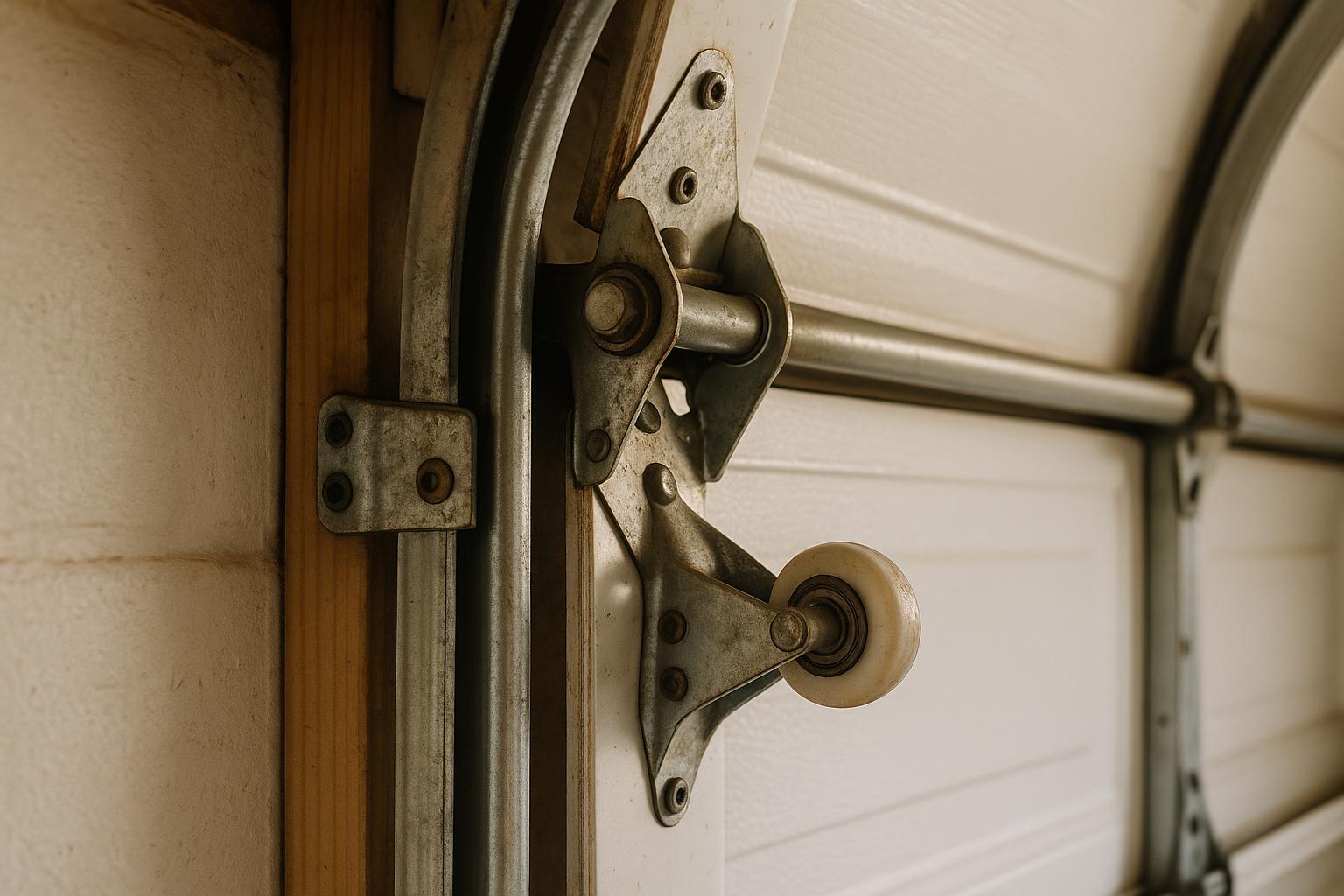
- Worn rollers: If your door uses metal rollers without nylon coatings, they naturally become noisier as they wear down. Nylon rollers are significantly quieter and last longer.
- Misaligned tracks: When tracks shift even slightly, the rollers scrape against the sides instead of gliding through the center, producing a squealing sound.
What to Do
Start by applying a garage door-specific lubricant (not WD-40, which is a solvent, not a lubricant) to the rollers, hinges, and tracks. If the noise persists, the rollers may need to be replaced, or the tracks may need professional realignment.
Grinding or Scraping
A grinding noise is harder to ignore and usually signals a more pressing issue than a simple squeal.
What Causes It
- Damaged rollers: Rollers that are chipped, cracked, or have flat spots will grind against the track instead of rolling smoothly.
- Bent tracks: A track that's been dented — whether from an accidental bump with a car or gradual warping — forces the door to scrape its way through the damaged section.
- Opener gear wear: If the grinding seems to come from the motor unit itself, the internal gears in your garage door opener may be stripped or wearing out. This is especially common in older chain-drive openers.
What to Do
Inspect the tracks visually for obvious dents or bends. Check the rollers for visible damage. If the grinding comes from the opener, stop using it and call a technician — continuing to run a stripped gear can burn out the motor entirely.
Rattling or Vibrating
A rattling garage door can make your entire garage — and sometimes the rooms above it — feel like a minor earthquake is happening every time you come and go.
What Causes It
- Loose hardware: The nuts, bolts, and screws that hold your garage door system together loosen naturally over time due to the constant vibration of daily operation. This is one of the most common causes of rattling.
- Loose chain or belt: If your opener uses a chain drive, a chain that's lost its proper tension will slap and rattle during operation. Belt-drive openers can develop similar issues, though they're generally quieter.
- Unsecured opener: Sometimes the opener unit itself vibrates against the ceiling mount, especially if the mounting brackets have loosened.
What to Do
Grab a socket wrench and tighten all visible nuts and bolts on the door's hinges, brackets, and track mounts. Check the chain tension according to your opener's manual — typically, it should hang about half an inch above the rail at its midpoint. If the opener itself is vibrating, you can add rubber isolation pads between the unit and the ceiling bracket to dampen the noise.
Banging or Popping
A sudden bang or pop is startling and understandably alarming. It can happen once during a cycle or repeat at the same point every time the door moves.
What Causes It
- Panel issues: If a door panel has become slightly warped or a hinge is binding, the panel may flex and pop as it moves through a tight spot in the track.
- Torsion spring adjustment: Springs that aren't properly balanced can cause the door to jerk or slam at certain points in its travel, creating a banging sound.
- Track obstruction: Even a small piece of debris in the track can cause the door to jump and bang as the rollers pass over it.
What to Do
Clear the tracks of any visible debris. If the banging happens at the same spot every time, look closely at that section of the track and the corresponding hinge and roller. Spring adjustments should always be handled by a professional — torsion springs are under extreme tension and can cause serious injury if mishandled.
Humming or Buzzing Without Movement
If your garage door opener hums or buzzes but the door doesn't move, that's a distinct issue from the noises above.
What Causes It
- Stripped opener gears: The motor is running, but the internal gears can no longer transfer power to move the door.
- Disconnected door: The emergency release cord may have been pulled, disconnecting the door from the opener carriage.
- Frozen or stuck door: In rare cases, the door itself may be physically stuck — due to a broken spring, a locked manual latch, or an obstruction — causing the motor to strain without result.
What to Do
First, check whether the emergency release has been engaged and reconnect it if needed. If the motor is clearly running but nothing is happening mechanically, turn off the opener and call for a repair. Running a motor against a stuck door can cause electrical damage or motor burnout.
When Noise Means It's Time for Preventive Maintenance
Here's the thing most homeowners don't realize: many of these noises are preventable. A professional preventive maintenance visit once or twice a year can catch loose hardware, dry components, worn rollers, and developing track issues before they turn into the kinds of sounds that wake up the whole house at 6 a.m.
During a maintenance visit, a technician will lubricate all moving parts, tighten hardware, inspect springs and cables, test the balance of the door, and check the opener's safety features. It's a small investment that extends the life of your entire system and keeps things running quietly.
Living in Sonoma? We're Right Around the Corner
At Sonoma Overhead Garage Door, we've diagnosed just about every garage door noise imaginable for homeowners and businesses throughout Sonoma, Santa Rosa, Petaluma, Napa, Rohnert Park, and Cotati. Whether it's a quick lubrication fix or a full roller and track overhaul, our team shows up on time and gets it handled right the first time.
If your garage door has started making a noise that doesn't sound right, don't wait for it to get worse. Give us a call and let us take a listen. Most issues are faster and more affordable to fix than you'd expect — especially when you catch them early.