
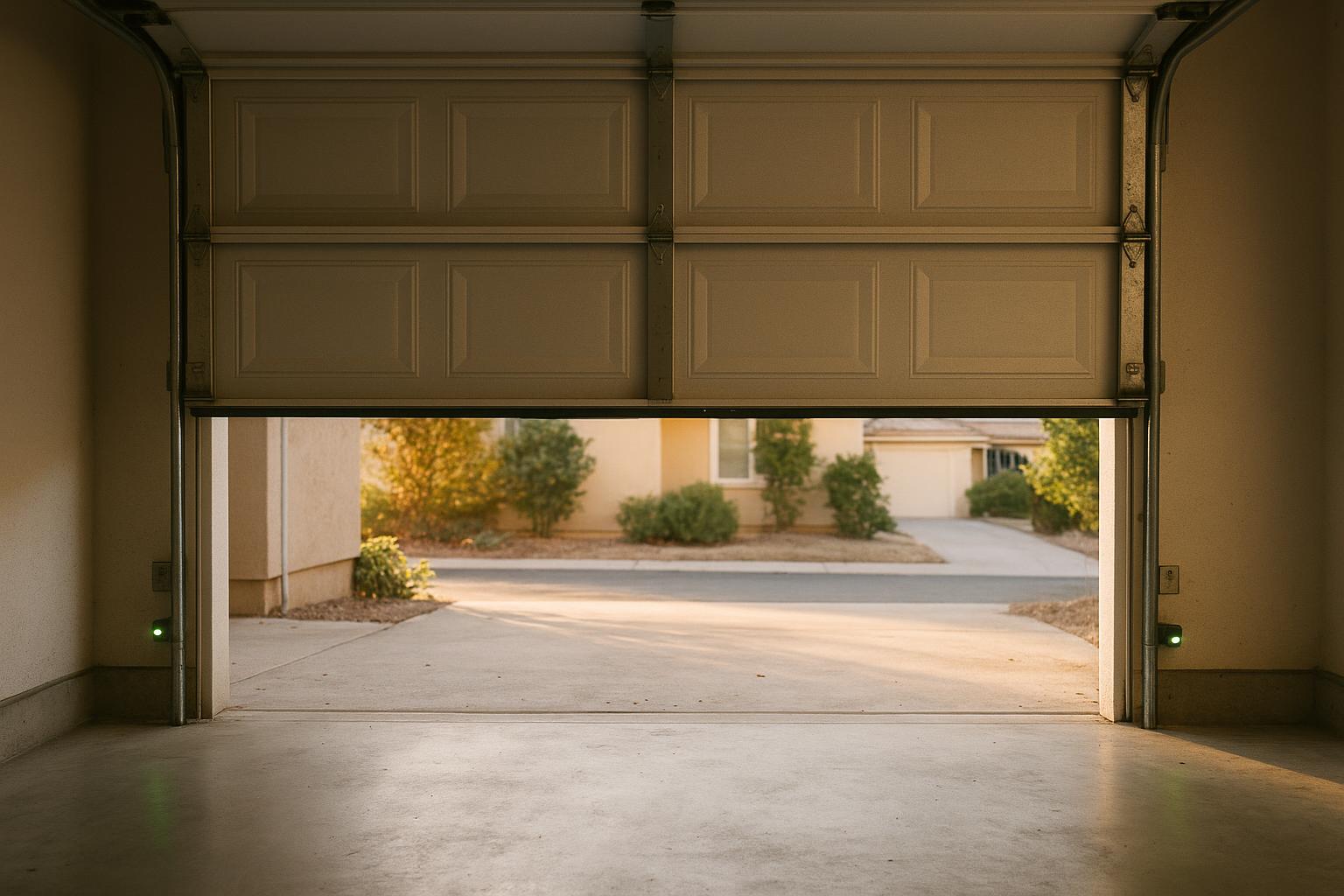
That Frustrating Moment When Your Garage Door Won't Stay Closed
You press the button on your garage door remote, the door starts its descent, and then — just before it reaches the floor — it reverses and goes right back up. You try again. Same thing. Maybe it stops halfway down, maybe it gets within inches of the ground, but it refuses to close all the way.
This is one of the most common garage door complaints we hear from homeowners across Sonoma County, and the good news is that it's almost always fixable. The tricky part is figuring out which of several possible causes is behind the problem. Let's walk through the most likely culprits so you can understand what's happening and know when it's time to call in a professional.
Understanding Why Garage Doors Reverse
Modern garage door openers are designed with safety mechanisms that force the door to reverse if something seems wrong. This is actually a good thing — these features were mandated by federal law in the early 1990s after injuries involving closing garage doors. Your door is supposed to reverse when it encounters resistance or detects an obstruction.
The problem arises when your door thinks something is blocking it even when the path is completely clear. When that happens, you're dealing with a sensor issue, a settings problem, or a mechanical malfunction that's creating real resistance the opener can't overcome.
Check Your Safety Sensors First
The number one reason a garage door reverses before reaching the floor is a problem with the photoelectric safety sensors. These are the small devices mounted on either side of your garage door opening, about six inches off the ground. They shoot an invisible beam across the doorway, and if anything breaks that beam while the door is closing, the system reverses immediately.
Here's what to check:
- Alignment: The sensors need to point directly at each other. If one gets bumped — by a bike, a lawnmower, or even a curious pet — the beam is broken and the door won't close. Look for a steady green light on both sensors. A blinking light usually means they're misaligned.
- Dirty lenses: Dust, cobwebs, and moisture can accumulate on the sensor lenses over time. A quick wipe with a soft cloth can sometimes solve the problem instantly.
- Sunlight interference: In Sonoma, our bright afternoon sun can sometimes overwhelm the sensor's infrared beam, especially if your garage faces west. If the problem only happens at certain times of day, sunlight is likely the culprit. Shading the sensors with a small cardboard tube can help.
- Damaged wiring: The thin wires running from the sensors to the opener can get pinched, frayed, or chewed by rodents. Inspect the full length of the wire for any visible damage.
Your Close-Force Setting May Need Adjustment
Every garage door opener has force settings that control how much power the motor uses when opening and closing the door. If the close-force setting is too low, the opener interprets normal friction as an obstruction and reverses the door as a safety precaution.
This commonly happens after seasonal temperature changes. Wood garage doors in particular can swell during the damp winters we get here in Sonoma County, creating more friction in the tracks. The door worked fine all summer, and now it won't close — the extra resistance from a swollen door is just enough to trigger the reversal.
Most openers have small adjustment screws or dials on the back or side of the motor unit, typically labeled "open force" and "close force." Increasing the close force slightly may solve the issue. However, be cautious — setting the force too high defeats the safety purpose of the feature. If you're not confident making this adjustment, it's worth having a technician handle it.
Track and Roller Problems
If your garage door tracks are bent, dirty, or misaligned, the door can bind or stick as it moves. When the opener encounters this resistance, it does exactly what it's designed to do: it reverses.
Signs of track problems include:
- Visible bends or dents in the metal tracks
- The door appearing crooked or uneven as it moves
- Scraping or grinding noises during operation
- Gaps between the rollers and the track
Worn-out rollers can cause similar issues. Nylon and steel rollers degrade over time, and when they don't spin freely, they create drag that the opener may interpret as an obstruction. Lubricating the rollers and hinges with a silicone-based garage door lubricant is a simple maintenance step that can prevent this problem.
The Travel Limit May Be Off
Your garage door opener uses travel limit settings to know where the door should stop when fully open and fully closed. If the down-travel limit is set incorrectly — telling the motor to push the door further than it can physically go — the door hits the floor and keeps trying to move. The opener senses the resistance and reverses.
This issue is common after a new opener installation or when someone has recently adjusted the settings. It can also drift over time as components stretch and settle. Like the force adjustment, travel limits can usually be corrected with the adjustment screws on your opener, but getting them dialed in precisely takes some patience.
Broken or Worn-Out Components
Sometimes the reversal problem points to a bigger mechanical issue:
- Worn cables: Fraying lift cables can cause the door to move unevenly, creating resistance on one side.
- Failing opener gear: The nylon gear inside many belt-drive and chain-drive openers wears down over years of use. When it starts to strip, the opener loses its ability to push through normal resistance.
- Warped door panels: Damaged or warped panels can cause the door to bind in the tracks, especially near the bottom.
These issues generally require professional repair. Attempting to fix cables or internal opener components without proper training and tools can be dangerous.
When to Call a Professional
If you've cleaned the sensors, checked their alignment, and the problem persists, it's time to bring in someone who can diagnose the issue properly. Garage door systems involve heavy components under significant tension, and adjustments that seem simple can lead to bigger problems — or injuries — if done incorrectly.
At Sonoma Overhead Garage Door, we troubleshoot reversing issues regularly for homeowners in Sonoma, Santa Rosa, Petaluma, Rohnert Park, and throughout the county. In most cases, we can identify and fix the problem in a single visit. Whether it's a sensor realignment, a force adjustment, track repair, or a component replacement, we'll explain exactly what's going on before we do any work.
A Quick Prevention Tip
The best way to avoid unexpected garage door problems is regular preventive maintenance. A yearly tune-up that includes lubricating moving parts, tightening hardware, testing the safety features, and inspecting tracks and rollers can catch small issues before they turn into the kind of problem that leaves your garage door stuck open on a cold Sonoma evening.
If your garage door keeps reversing and you can't figure out why, don't keep pressing the button and hoping for the best. Give us a call, and we'll get it sorted out so your door works the way it should — every single time.